Stop Ignoring Your Kitchen Table: Decor Ideas That Make an Instant Impact
Disclosure : This post may contain affiliate links or paid partnerships. I may earn compensation if you click a link or make a purchase, at no additional cost to you. See my disclosure for more info.
Most kitchen tables are a design afterthought.
You spent weeks choosing your cabinets. You agonized over backsplash tile. You sourced the perfect pendant lighting.
And then you put a candle stub and a fruit bowl from three apartments ago in the middle of the table and called it done.
That’s the problem.
Your kitchen table is the most-seen, most-used horizontal surface in your entire home. It deserves more than leftovers from a previous chapter of your life.
Here’s how to actually style it — practically, affordably, and in a way that lasts.
The Real Reason Your Table Never Looks Right
Stop blaming your budget. Stop blaming your table size. Stop blaming your lack of design training.
The reason your kitchen table looks wrong is simpler than any of that: there is no intention behind what’s on it.
Objects got placed there by inertia, not decision. A fruit bowl appeared. A candle arrived as a gift. A stack of papers materialized and never left.
None of it was chosen. It just accumulated.
Here’s the rule: every single object on your table must earn its presence through beauty, function, or both. If an item does neither, it has no business being there.
Clear the table. Start fresh with that filter. Build back deliberately.
Ready? Here’s what to put back on.
1. A Centerpiece That Works in Real Life
Giant floral arrangements have one purpose: to impress in photographs. At an actual table where actual people eat and talk, they block sightlines, interfere with passing dishes, and need replacing every ten days.
Choose something that serves the table rather than commanding it.
A solid wooden dough bowl with seasonal fillings works every month of the year. Three pillar candles in varied heights add warmth and visual movement. A small herb plant in a terracotta pot earns its place every time you reach for the basil.
The test is simple: can everyone at the table see each other? If yes, your centerpiece has passed. If not, it’s too large.
Low. Practical. Considered.
2. A Table Runner That Does the Heavy Lifting
Here’s a mistake that’s more common than it should be: styling a kitchen table without a runner.
Without something to anchor the center, even well-chosen objects look like they were just set down and forgotten. A runner creates a visual axis. It gives your arrangement something to organize around. It adds texture and warmth in one single move.
A linen runner works in almost any kitchen. Burlap or jute for earthy, casual kitchens. Macramé for something with more texture and personality.
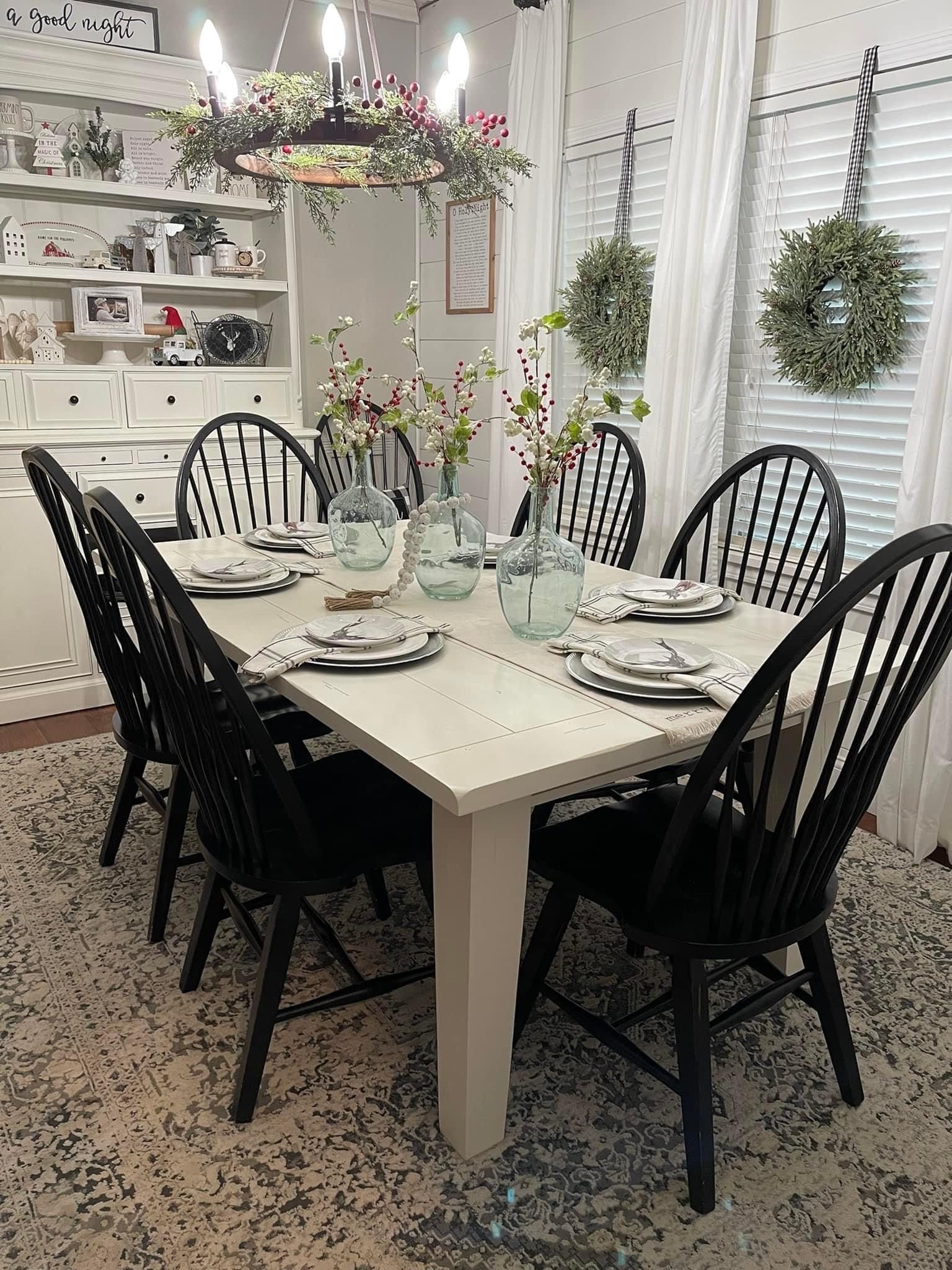
Contrast is non-negotiable: light runner on a dark table, or something richer on a pale surface. The contrast is what makes the runner work.
Add this one element and watch how much better everything on top of it instantly looks.
3. Odd Numbers: Use Them Every Time
This is a design rule that professionals apply without thinking about it. You should too.
Odd-numbered groupings create visual interest. Even groupings create visual resolution — which sounds positive but actually means the eye settles and moves on too quickly.
Three candles in varying heights? Dynamic. Two candles? Resolved and forgettable.
One tall object flanked by two shorter ones? That’s a composed vignette. Four objects of equal height? That’s a checkout display.
Three items on a tray. Five seasonal pieces in a bowl. One centerpiece with two flanking elements.
Odd numbers. Every time. No exceptions.
4. Candles: Stop Waiting for a Reason to Use Them
If you have candles sitting in a drawer or on a shelf waiting for a special occasion, take them out right now.
Your kitchen table is the special occasion. Every single evening.
Quality beeswax tapers in brass holders immediately elevate a table’s visual register. Pillar candles arranged on a wooden board feel deliberate and grounded. If open flames aren’t practical in your home, high-quality LED candles produce a convincing warm flicker that serves the same purpose.
Candles transform the quality of an evening. They’re not a luxury — they’re a small daily investment in the experience of your own home.
Use them tonight.
5. Free Greenery Beats Expensive Arrangements Every Time
Stop buying expensive arrangements when the best greenery for your kitchen table grows outside your door for free.
Go outside. Clip something. Put it in a simple glass container or a ceramic pitcher. Place it on the table.
That’s it. That’s the arrangement.
The reason natural greenery consistently outperforms manufactured alternatives: the organic imperfection is the point. Real plants have texture, layering, and variation that no factory can replicate at scale.
Rotate with the seasons. Let your table reflect the world outside. It takes minutes and costs nothing.
If fresh greenery genuinely isn’t sustainable for your lifestyle, invest in premium faux stems — the kind that fool people on second look. Reject anything that reads as plastic from across the room.
6. One Tray Transforms Three Objects Into an Arrangement
Here’s the fastest upgrade you can make to any kitchen table, and it works every time.
Get a tray. A round wooden one. A woven seagrass oval. A polished stone rectangle. Doesn’t matter which — choose what fits your kitchen’s personality.
Place three items on it. A candle. A small plant. A ceramic salt and pepper set.
Now step back.
What you have is a composition — a deliberately constructed visual moment. Without the tray, those same three items scattered on the table surface would look abandoned.
The tray creates containment, which reads as intention. That’s the entire secret.
And for farmhouse kitchens, a rustic wooden tray is practically the definition of effortless style.
7. Set the Table Every Day. No Exceptions.
Saving your placemats for when guests arrive is a habit worth breaking.
It sends a signal you might not intend: that the everyday version of your home doesn’t warrant the same care as the performance version.
Pull out the placemats. Use them at every meal. The table looks better. You feel better sitting at it. Your family eats in a space that communicates that someone cares about the quality of daily life here.
Woven rattan adds warmth and texture. Linen brings understated polish. A charger plate under a standard plate adds a layer of visual depth that makes the whole setting look intentional.
Ten seconds. Worth it every time.
8. Rotate Your Decor or It Will Become Invisible
Set up a beautiful table and leave it untouched for six months. What happens?
Your eye stops seeing it. The brain registers familiar things as background. What was once noticed becomes wallpaper.
The solution: small, deliberate seasonal rotations.
Autumn means warm tones, dried botanicals, gourds, and deeper textures. Winter means evergreens, dark berries, heavier linens, and more candlelight. Spring is for fresh flowers, pale fabrics, and something green and living. Summer calls for citrus, bright accents, and loose, relaxed arrangements.
Keep a small box of seasonal table pieces somewhere accessible. Every few months, swap it in. Twenty minutes of work, and your kitchen feels entirely refreshed.
Never let the table go stale. A stale table is a missed opportunity, every single day.
9. Swap Paper Napkins for Linen. Today.
This is one of the smallest changes you can make and one of the most noticeable in practice.
Paper napkins are functional. They’re also a visual signal that the table setting wasn’t thought about.
A cloth linen napkin, folded simply and placed at the left of the plate, says the opposite. It says: someone set this table on purpose.
Linen napkins are affordable. They wash easily. They soften and improve over time. In neutral tones — natural, white, sage, grey — they work with every table setting you’ll ever create.
Add a wooden napkin ring and the effect compounds.
Stop buying paper napkins. Use the money you save to build out the rest of your table decor.
10. The Edit: Remove Something. Do It Now.
After you apply everything in this guide, stop.
Step back. Look at the whole table.
Then take one thing away.
Not because it’s wrong. Because open space is not a gap — it’s a design choice. It communicates confidence. It says: what’s here was carefully chosen, because we removed everything that wasn’t necessary.
The kitchen tables that stop people in their tracks — the ones in the well-shot interiors you keep bookmarking — have breathing room. They don’t look full. They look edited.
More objects does not equal better design. Editing does.
Take something away. You’ll be glad you did.
Now Go Fix Your Kitchen Table
You’ve had everything you need for this for a long time.
A runner. A tray. Three objects on that tray. Some candles. A cutting from whatever’s growing outside. Cloth napkins. Placemats at every meal. Seasonal swaps every few months. And the discipline to remove one thing when you think you’re done.
That’s a styled kitchen table. Not a magazine set. Not someone else’s Pinterest board. Yours.
Pick two ideas from this list. Start this week.
Your table sees more of your daily life than almost anything else in your home. Give it the attention it’s earned.
No more excuses. Let’s go.
🔍 Focus Keyphrase: kitchen table decor ideas
📌 SEO Title (< 60 chars): Must-Have Kitchen Table Decor Ideas to Elevate Your Home
🔗 Slug (< 60 chars): must-have-kitchen-table-decor-ideas
📝 Meta Description (< 155 chars): Discover the best kitchen table decor ideas to elevate your space. From centerpieces to seasonal swaps, transform your table today.