Warehouse to Welcome – 39 Ways to Make Industrial Style Feel Like Home
Disclosure : This post may contain affiliate links or paid partnerships. I may earn compensation if you click a link or make a purchase, at no additional cost to you. See my disclosure for more info.
There’s a restlessness in your living room you can’t quite shake.
Not a major problem. More of a low-grade dissatisfaction. The room functions but never settles. It looks fine but never feels complete.
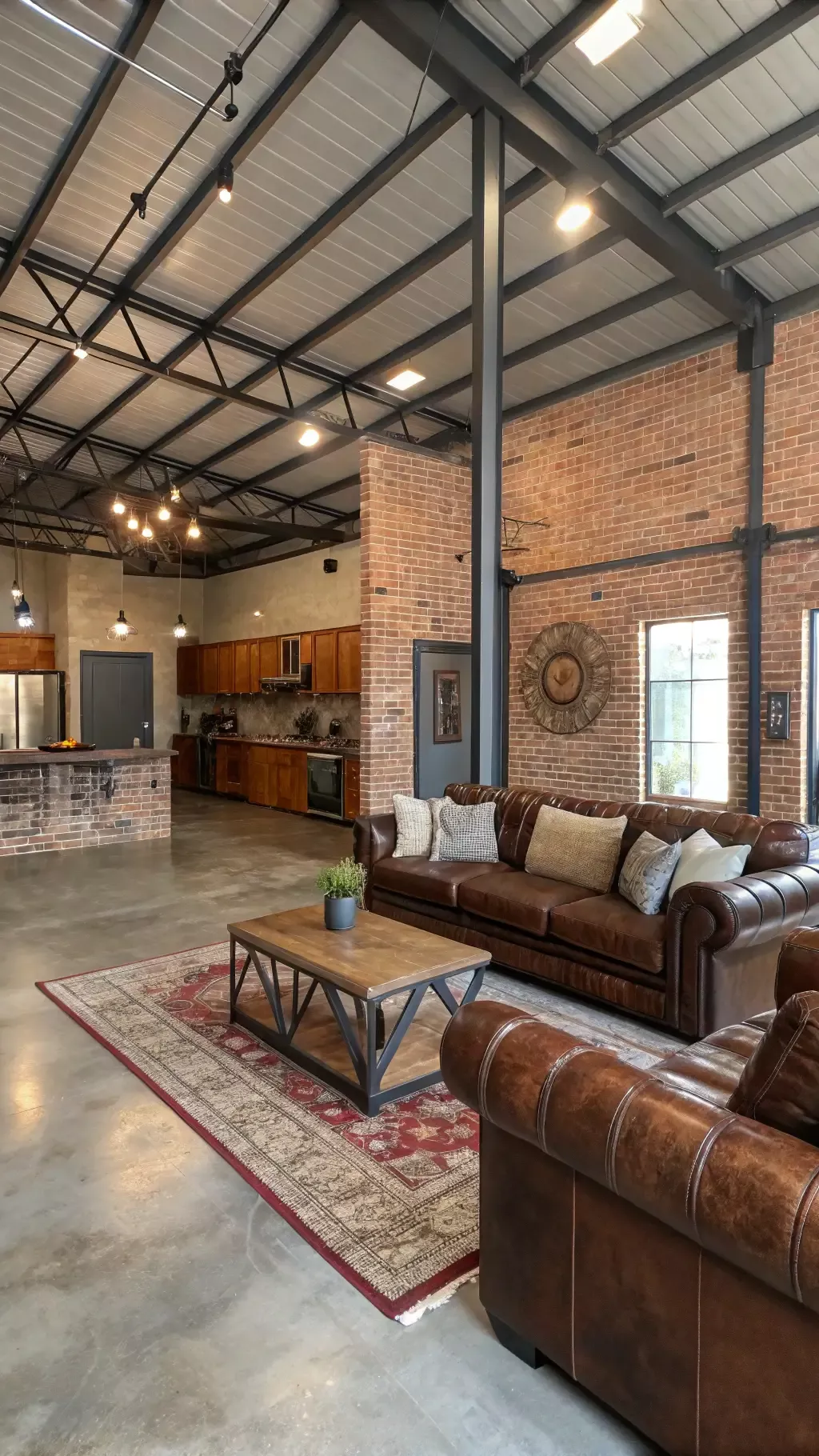
Industrial design came into the picture and something clicked. Salvaged timber, raw concrete, exposed metalwork, heavy-gauge pendant lights. There’s an honesty to it — a sense that the materials haven’t been covered up or prettied over.
But every reference image you save looks like it belongs in an architecture journal, not a home. Beautiful to study. Difficult to imagine living inside.
“The look is exactly what I want. But those rooms feel like no one lives in them.”
That observation is accurate. And it points to the core issue: industrial rooms without intentional warmth layers feel like sets, not homes. The rooms that work — really work — treat softness as a design material alongside concrete and iron.
You can build an industrial room that looks exactly right and feels like you actually want to be in it. These 39 ideas are your map for doing both at once.
Building a Lighting Plan With Texture and Depth
Industrial lighting has one recurring failure mode: the single dramatic pendant hung at center.
Striking? Yes. Sufficient? Not remotely.
One source flattens a room. Atmosphere requires multiple sources working at different heights and in different intensities.
1. Hang a composition of pendants at staggered drop distances over the sitting area.
Four or five fixtures at varied heights builds rhythm across the ceiling plane and removes the single-center-bulb cliché.
2. Post a posable floor lamp in flat black beside the reading chair.
Directional floor lamps earn their place visually even when off. Functionally, they provide task light that overhead fixtures never can.
3. Fit aged brass or antique gold wall sconces on either side of the sofa.
Brass is industrial design’s warmth accelerator. Pair it with black and concrete and it reads as a considered, elevated choice rather than a decorative afterthought.
4. String authentic filament bulbs across the ceiling on a deliberate black cable route.
Real filament on proper black wire — not the decorative imitation versions. The amber glow of genuine filament across a ceiling does something extraordinary to the room’s temperature.
5. Cluster pillar candles on a metal tray as a living light source.
Open flame is irreplaceable as a warmth element. A cluster of pillar candles on a metal tray shifts the room’s mood in a way no electrical fixture can. It moves. It breathes. It belongs.
Bringing Nature In to Soften the Structural
If an industrial room is running sterile, the prescription is simple:
Introduce organic materials.
Plants, stone, dried botanicals, natural fiber — all of these interrupt the hard-surface dominance and bring a quality that manufactured objects cannot replicate.
6. Place a tall floor plant in an unfurnished corner.
A bird of paradise, rubber tree, or large-leafed monstera in a woven planter addresses empty vertical space with immediate natural presence.
7. Arrange a rotating collection of small plants on a metal wall-mounted shelf.
Four or five small plants in varied vessels. Different leaf shapes and heights. The contrast of living green against iron metal is quietly powerful.
8. Fill a ceramic or stoneware pot with dried pampas grass or eucalyptus branches.
Dried arrangements bring the silhouette and texture of botanicals without any of the maintenance. Choose unusual forms that earn their display.
9. Place natural stone objects — a marble tray, a geode bookend — throughout the room.
Stone adds density and natural calm. Alongside iron and timber, it deepens the material story without competing with it.
Locking In the Right Structural Foundations
The room’s architecture sets the ceiling and the floor of every subsequent decision. Get these right and styling becomes much easier; get them wrong and no amount of accessorizing corrects the underlying problem.
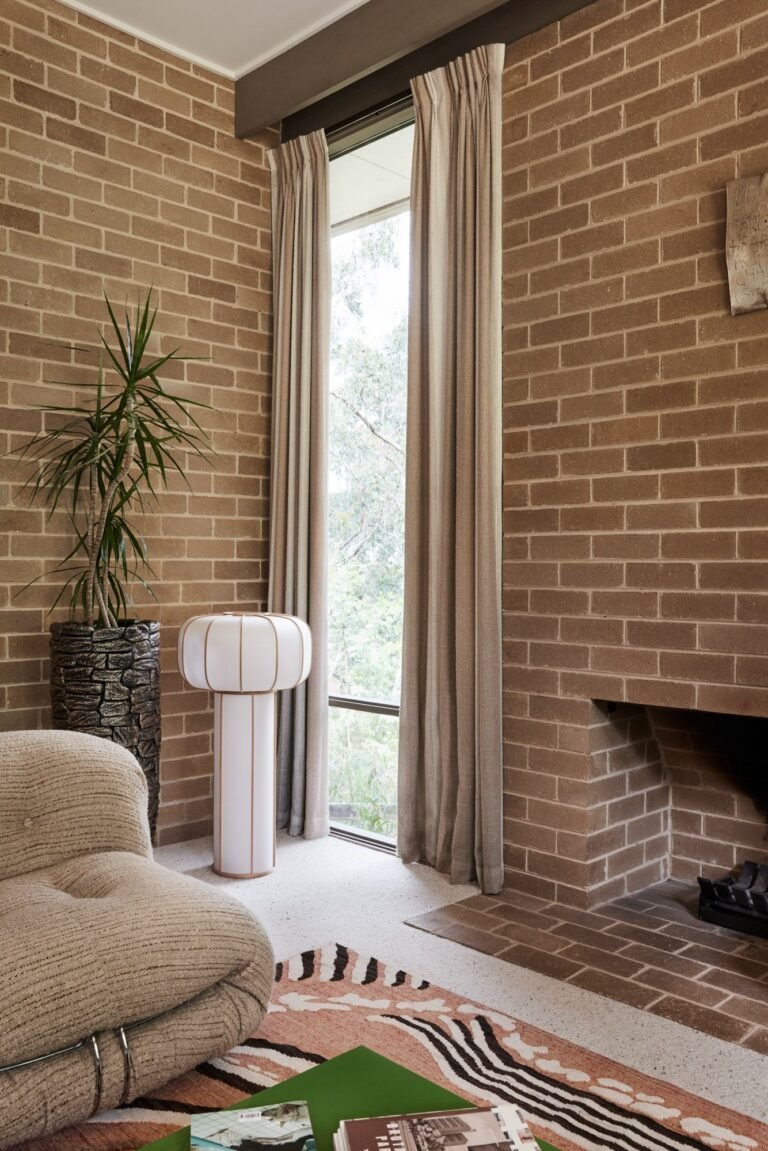
10. Uncover one wall’s original brick and keep adjacent walls soft and quiet.
One exposed brick wall is a complete industrial statement. Multiple brick walls become a fortress. Surrounding walls in warm white or sand balance the exposure.
11. Seal concrete floors to take them from raw to refined.
A high-quality sealer or polish converts the same material from looking unfinished to looking deliberate. A small investment with a decisive visual return.
12. Run wide-plank salvaged wood flooring for warmth at the ground level.
Reclaimed timber floors bring everything that concrete lacks: warmth, texture, patina, and the felt sense of history underfoot.
13. Source oversized black steel-frame window glazing.
Slim black profiles on large-format windows are the architectural signature of industrial interiors and one of the most effective ways to flood the room with natural daylight.
14. Reveal the structural ceiling beams and warm them with stain.
Exposed beams declare industrial character immediately. A honey, amber, or walnut stain then converts that raw declaration into something that feels warm rather than institutional.
15. Treat exposed pipe runs and ductwork as graphic elements using matte black paint.
Functional infrastructure becomes visual line work when painted flat black. The difference between “plumbing” and “design detail” is one coat of matte paint.
Furniture That Makes Industrial Livable
Here’s the furniture mistake: all-in on iron frames and rivet detail, nothing soft in sight.
The room becomes visually interesting and physically unwelcoming. Nowhere to really rest. No surface that yields. No reason to stay.
Balance every hard material with something tactile and yielding.
16. Lead with a large, generously cushioned leather sofa in a warm aged tone.
Cognac or brown full-grain leather is the most effective single warmth anchor in an industrial room. It ages in the right direction and makes every other material around it look more intentional.
17. Place a live-edge slab coffee table at the center of the seating group.
An organically shaped timber slab pushes back against the room’s geometric structures. The rougher and more natural the edge, the more effectively it does that job.
18. Pull in fabric-covered accent chairs opposite the sofa.
Velvet or heavyweight linen facing the leather sofa creates a conversation between hard and soft at the room’s center. These chairs communicate welcome before anyone sits in them.
19. Install an iron-and-timber open shelving unit and edit it down to essentials.
Space between objects. A plant, a book, a ceramic piece per section. Negative space in open shelving reads as confident; packed shelves read as storage.
20. Position a well-traveled leather trunk as an accent table near the seating.
Hidden storage. Genuine patina. The sense that the room evolved gradually. A trunk checks every box the industrial spirit asks for.
21. Add a large woven floor pouf near the sitting area.
Chunky texture. Casual presence. Instant visual warmth. A well-chosen pouf makes an industrial room suddenly feel approachable rather than austere.
Color Choices That Prevent the Industrial Room From Running Cold
Industrial doesn’t mean achromatic. The gray-and-black room is a choice, not a definition — and it’s rarely the right one.
“Doesn’t it have to be mostly gray and dark?”
No. And believing so produces cold, punishing rooms that happen to have exposed beams.
Warmth in the color palette is a structural decision, not decoration.
22. Choose a warm-toned white for the walls rather than cool or gray-leaning neutrals.
White with a warm base handles the room’s varying light conditions gracefully. Cool whites and mid-grays harden under low light and make the room feel clinical.
23. Introduce rust, terracotta, and burnt amber as recurring accent colors.
A terracotta vase. A rust throw. An amber-toned knit blanket. These tones share their origins with brick, iron, and raw wood and feel entirely at home in their company.
24. Carry green through the room in both botanical and textile form.
Plants handle part of this naturally. An olive cushion or forest green textile does the rest. Green keeps the palette alive and prevents it from collapsing into monotone.
25. Apply matte black as controlled punctuation throughout the room, not as a general atmosphere.
Frames. Lamp bases. Hardware. Accent trays. Matte black defines and anchors. It should never overwhelm. Use it deliberately.
Small-Scale Decisions With Large-Scale Payoffs
The final 10% of a room’s quality lives in these small choices. They’re what move a space from “nearly there” to “completely there.”
26. Update switch plates to matte black or brushed brass from standard white plastic.
Minimal time, minimal cost, significant visual impact. One of the most underrated upgrades in any industrial room.
27. Orient books spine-inward on open shelves.
Paper page edges create a calm, unified tone in place of the visual jumble of colored cover spines. Quiet and surprisingly elegant.
28. Arrange a small, composed vignette on a wood board on the coffee table.
The board as base. Candle, small plant, one object. Contained and focused, it gives the table surface meaning and visual purpose.
29. Apply consistent matte hardware across all surfaces and fixtures.
One finish. Matte black, aged brass, or hammered iron. No chrome. No exceptions. Consistency here is what separates curated from cluttered.
30. Layer a character-filled vintage rug on top of a foundational jute rug.
The jute grounds and anchors. The vintage piece contributes story, color, and warmth on top. The layered result is significantly richer than either alone.
31. Keep at least one visibly imperfect object in the room without apologizing for it.
Industrial style is built on honesty about materials and time. A chipped surface, a worn edge, a visible repair is not a flaw — it’s the design speaking its language.
Soft Furnishings That Signal Real Habitation
Pull all the textiles out of an industrial room.
What you have left is a photo location. Visually correct. Humanly inert.
Fabric is the signal that people actually live here. Remove it and the room stops being a home.
32. Lay an oversized natural fiber rug beneath the entire seating area.
Go larger than instinct suggests. Front legs of all major pieces on the rug. A properly sized jute rug grounds the space and adds warmth at the physical and visual level simultaneously.
33. Rest a heavy knit throw over one arm of the sofa.
The single most accessible warmth gesture on the entire list. One throw changes a room’s entire emotional message: come in, stay, be comfortable.
34. Mix linen, cotton, and wool cushions in unmatched earth tones and varied sizes.
Rust. Cream. Slate. Moss. Ochre. Different weaves, different dimensions. The arrangement should look gathered, not purchased as a set on a single afternoon.
35. Hang floor-length linen drapes in natural or oatmeal tones.
Even alongside industrial-style windows, curtains add a softer register to the room’s overall character. Natural linen at full length brings quiet elegance that the architecture alone cannot supply.
Giving the Walls Something Worth Looking At
Raw textured walls carry their own visual presence. Smooth plaster with nothing on it just reads as emptiness.
36. Make a large-scale abstract work in a spare, thin-profile frame the focal point of the main wall.
Commit to scale. One oversize work above the sofa commands the room. A stripped-back metal or timber frame keeps the presentation honest and on-brand.
37. Build a gallery arrangement using frames in deliberately varied materials.
Iron, blonde ash, aged brass. Different shapes, different scales. The mix creates a wall that reads as accumulated personal history rather than purchased decor.
38. Install a large iron-framed mirror or a mechanical gear clock as a wall-mounted centrepiece.
Mirrors expand the room and double the light. Exposed-mechanism clocks are functional objects that operate as wall sculpture at the same time. Both are worth significant wall real estate.
39. Prop artwork against the wall on a shelf rather than hanging it.
Leaned art suggests organic evolution. It says this room grows over time, shaped by whoever lives in it. The right note for industrial design. The right note for a home.
Give Your Room What It’s Been Missing
The direction has been right all along. You’ve already made moves. Added a few things. Shifted a few choices.
What hasn’t clicked yet is the relationship between materials — because an industrial room’s warmth is built through contrast and conversation, not through any single element.
Soft answers hard. Warm neutralizes cool. Organic softens geometric. The more deliberately those tensions are created, the more the room comes alive.
You don’t need all 39 ideas. Take the ones that suit your room, your budget, your rhythm of life. Start with one. Return to the list when you’re ready for the next.
At some point the room will cross a threshold and start feeling genuinely like yours.
Choose one idea and start on it this week.
The room has been waiting. Now it’s your move.
🔍 Focus Keyphrase: industrial living room ideas
📌 SEO Title: 39 Industrial Living Room Ideas That Feel Like Home
🔗 Slug: industrial-living-room-ideas
📝 Meta Description: Discover 39 industrial living room ideas that balance raw style with real warmth. From lighting layers to textiles — make the look truly livable.