Corner Lighting Done Right: The Floor Lamp Designs That Actually Work
Disclosure : This post may contain affiliate links or paid partnerships. I may earn compensation if you click a link or make a purchase, at no additional cost to you. See my disclosure for more info.
The corner goes unaddressed.
You notice it whenever you sit down. Whenever you walk through the room. Whenever you host anyone and find yourself hoping they won’t look too closely at that bare, unresolved space in the corner.
You’ve considered throw pillows. More art on the wall. A plant. You’ve scrolled through so many inspiration boards that they all started to blur together.
None of it is the right answer because none of it addresses the actual problem.
The problem is that the corner lacks vertical presence and warm light. And the solution — the only solution that actually works at this scale — is a floor lamp. The right one. Chosen specifically for that space.
Here is a design-focused breakdown of the seven styles that perform best in corner placements, along with the decision criteria that determine which belongs in yours.
The Design Principle Behind Empty-Corner Discomfort
Interior design has a visual grammar, and corners are its punctuation marks.
You invested in the room’s sentences: a well-chosen area rug, furniture positioned for both function and balance, walls addressed with intention. But the corner — the place where the room’s composition concludes — was left empty.
That omission has a perceptible effect. Corners anchor the visual field of a room. When they’re resolved, the room feels settled and complete. When they’re not, the composition reads as unfinished regardless of what else has been done well.
Interior photographers and stylists know this instinctively. Every room that photographs beautifully has deliberate corners. Not accidental ones, not simply-filled ones — deliberate ones, where something has been chosen to complete the composition.
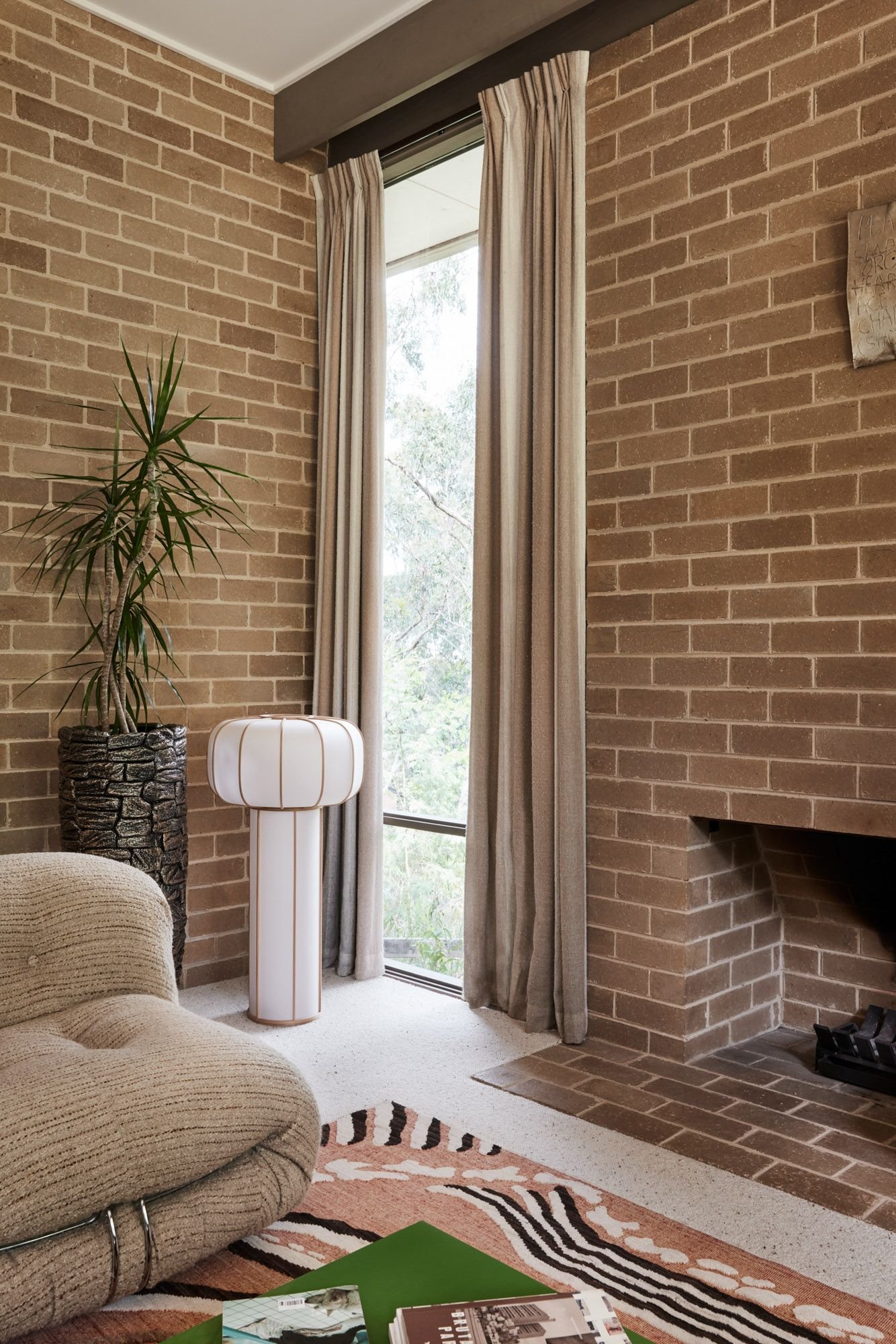
A floor lamp is the most efficient single element for achieving that completion. It introduces vertical scale, warm light, and design intention in one decision.
Why Poor Lamp Selection Compounds the Problem
A poorly chosen floor lamp does not merely fail to solve the problem — it adds a new one.
The selection error typically takes one of two forms. The first is context mismatch: choosing a lamp because of how it looks in isolation or in someone else’s setting, without considering whether it belongs in this specific room’s material palette, light quality, and proportions.
The second is scale miscalibration. A lamp that is too small beside dominant furniture reads as an afterthought. A lamp that is too large beside delicate furniture reads as an imposition. The lamp must be proportionate to the energy of what surrounds it.
What follows is a style-by-style analysis. Each style is evaluated on its design strengths, optimal placement conditions, and the contexts in which it is most likely to succeed.
1. The Arc Floor Lamp: Architectural Presence Without Structural Commitment
The arc floor lamp is the most architecturally expressive style in the category.
The curved arm traces a bold line from base to shade, projecting light away from the corner and over the furniture below. It functions, in effect, as a pendant fixture that requires no ceiling installation — delivering overhead-quality illumination from a freestanding base.
Optimal placement: corners behind sofas and beside reading zones, where the arc creates a defined canopy of light that reinforces the seating area’s sense of enclosure and comfort.
The design rule: the arc must extend over something with functional or visual purpose. A side table. A seating area. A reading chair. An arc hovering over unoccupied floor space creates drama without resolution — a compositional problem, not a solution.
Material and stylistic affinity: arc lamps integrate most naturally with low-profile, clean-lined furniture — contemporary sectionals, mid-century sofas, modernist seating. Highly ornate or traditional furniture tends to compete with the lamp’s angular drama.
Practical consideration: arc lamps require a counterbalanced, weighted base for stability. This is non-negotiable in households with young children or animals.
2. The Tripod Floor Lamp: Maximum Adaptability Across Style Contexts
Among floor lamp styles, the tripod lamp offers the broadest stylistic range.
Its three-legged structure carries cultural associations with artistic and creative environments — easels, camera equipment, drafting instruments — that lend it a quietly authoritative presence without demanding attention. The lamp contributes character while supporting, rather than competing with, the room’s existing identity.
Material selection drives stylistic placement. Warm wood legs are native to Scandinavian, bohemian, and organic design contexts. Matte or brushed metal legs are equally at home in industrial, contemporary, and urban interiors.
A notable advantage: the tripod lamp is compositionally self-sufficient. It does not require adjacent objects — no side table, no accessory grouping — to read as complete.
Placement principle: orient one leg toward the wall and two toward the room. This creates a visually stable, grounded stance and prevents the awkward visual of parallel legs running along a baseboard.
3. The Torchiere: Indirect Illumination as Room Architecture
The torchiere operates on a fundamentally different principle than other floor lamp styles.
Rather than casting light downward onto a surface or outward into a zone, it projects upward — using the ceiling as a diffusion medium. The ceiling reflects that light back into the room as soft, distributed ambient illumination that mimics the quality of natural overhead lighting.
For rooms without ceiling fixtures, a torchiere is effectively the only floor-level solution that fills the ambient lighting layer completely. For rooms with ceilings that read as lower than desired, the upward-directed light creates a perceptual lift — the ceiling appears more distant, the room more spacious.
Contemporary torchieres with LED dimming capability provide additional utility, allowing the ambient brightness to be calibrated to different activities and times of day.
The essential constraint: ceiling reflectivity is a design variable, not a constant. Light-colored ceilings — white, off-white, pale cream — amplify the torchiere’s output significantly. Dark or heavily pigmented ceilings absorb it. The ceiling condition should be assessed before selecting this style.
4. The Pharmacy Floor Lamp: Engineered Function as Design Language
The pharmacy lamp represents a design philosophy where function generates form.
The articulating arm and adjustable shade were developed for clinical precision — the ability to direct light exactly where needed, at exactly the angle required, without illuminating the surrounding area unnecessarily. That same capability, translated into residential contexts, makes it the optimal solution for reading corners, home offices, and functional workspaces.
Where other floor lamp styles prioritize atmospheric contribution, the pharmacy lamp prioritizes task-specific directional light. If the corner is functionally defined — reading, writing, creative work — this is the most aligned choice.
Its slim profile and purposeful appearance communicate intentionality: this corner was designed for a specific use, and the lamp serves that use.
Contextual enhancement: the pharmacy lamp’s purposeful character is reinforced by adjacent purpose — a side table, reading material, or a work surface nearby. Functional lamp and functional context read together as deliberate design.
5. The Statement Sculptural Lamp: Object-Level Design Intervention
Not every corner requires a lighting solution. Some require a design object that happens to emit light.
Sculptural floor lamps are evaluated primarily as form objects. Their illumination output is secondary to the visual presence of the lamp itself — the complexity of its silhouette, the quality of its material, the way it occupies space as an aesthetic element independent of whether it is switched on.
In rooms that have achieved a strong visual identity, a sculptural lamp can function as the decisive element that elevates the space from well-furnished to genuinely distinctive.
The disciplinary requirement: sculptural lamps demand compositional restraint. The lamp’s design strength must be allowed to read without competition. Select one bold dimension — form, material, or finish — and surround it with restraint in the others. A lamp that attempts all three simultaneously produces visual noise rather than visual interest.
6. The Shelf Floor Lamp: Vertical Efficiency as Design Strategy
The shelf floor lamp addresses two simultaneous constraints with a single vertical intervention: insufficient light and insufficient display surface.
By integrating shelving into the lamp column, this style provides illumination and display space within a footprint no larger than a standard floor lamp. In space-constrained environments — compact apartments, smaller living rooms, rooms where floor space is at a premium — this efficiency has genuine practical value.
A considered selection of objects on the shelves — books, a small plant, a photograph — transforms the corner into a layered vignette with depth, texture, and a narrative that a bare lamp cannot provide.
The curatorial rule: negative space on the shelves is not dead space — it is compositional breathing room. Leave at least one shelf empty. A fully loaded shelf lamp reads as storage. A selectively loaded one reads as curation. The distinction is visible from the far side of the room.
7. The Rattan or Woven Floor Lamp: Material Honesty and Atmospheric Light
The contemporary design language of natural materials — wood, linen, ceramics, organic textiles — has a specific acoustic in which a rattan or woven floor lamp participates authentically.
The woven shade performs a secondary design function beyond housing the bulb: when illuminated, the weave pattern casts complex shadow geometry across surrounding surfaces, creating a light quality that is warm, textured, and categorically different from what any smooth shade can produce.
This is a lamp optimized for atmospheric contribution. Its diffused output creates mood rather than utility. For rooms prioritizing ambiance over task function — bedrooms, sunrooms, relaxed living spaces — this is frequently the optimal choice.
The practical constraint: woven shades scatter light softly. They do not provide adequate illumination for close reading or focused work. This limitation should be assessed against the corner’s intended use before selecting the style.
In the appropriate context — paired with a floor cushion and a low woven basket — this lamp positions the corner as the room’s most relaxed destination.
Decision Criteria: Matching Style to Context
Style selection should be driven by four variables:
Functional requirement. What does the corner need to contribute to the room’s use? Task light for focused work? Ambient fill for the overall space? Visual presence only? This determines which category is relevant.
Ceiling height. Generous ceiling height enables arc lamps and torchieres, both of which use vertical volume as a design resource. Standard or lower ceilings are better served by pharmacy lamps and mid-height tripods that don’t compete with the ceiling line.
Room’s material and tonal identity. The lamp must either integrate into the room’s existing design language or depart from it deliberately. Accidental contrast is not a design position — it’s an oversight.
Available footprint. The physical dimensions of the corner determine which styles are viable. Arc lamps and tripods require horizontal clearance. Pharmacy lamps and shelf lamps have narrower footprints suitable for compressed spaces.
The Layered Lighting Principle
A floor lamp operating as the sole light source in a room produces illumination. Illumination alone is not lighting design.
Lighting design requires multiple sources at varied heights, each contributing a different quality and direction of light. Floor lamp at upper height. A table lamp at mid-level. Candles or low sources at seated eye level.
This vertical distribution creates the layered light quality that differentiates rooms that feel designed from rooms that simply contain furniture. The floor lamp is the anchor of that system — the element that establishes the upper register of the scheme.
Without it, the system lacks its most architecturally significant component.
Resolve the Corner
An empty corner is a design problem with a clear solution. The solution requires one decision: the right floor lamp for that specific space.
Assess the corner’s functional requirements. Evaluate the room’s stylistic identity. Measure the available footprint. Select the style that addresses all three without compromise.
A floor lamp does not merely occupy a corner.
It resolves the room’s composition.
That resolution is immediate, visible from every seat in the room, and deeply satisfying in a way that is difficult to achieve through any other single design decision at comparable cost.
Make the decision. Place the lamp. The room will tell you it was right.