29 Gorgeous Center Table Ideas That Make Living Rooms Look Professionally Designed
Disclosure : This post may contain affiliate links or paid partnerships. I may earn compensation if you click a link or make a purchase, at no additional cost to you. See my disclosure for more info.
Interior designers have a phrase for what’s happening in your living room.
They call it a “missing anchor.”
The seating is there. The lighting makes sense. The walls are painted. But nothing is holding the center of the room together. Nothing is giving the space its organizing visual logic.
That missing anchor is almost always the center table.
Professional designers understand something most homeowners don’t: the center table is the room’s organizing element, not just a surface to put things on. It defines the social space. It establishes the room’s material language. It tells visitors what kind of home they’ve walked into within seconds of arriving.
Get it right and the room suddenly looks intentional. Like someone made decisions. Like there was a plan.
Get it wrong — or skip it entirely, settling for whatever was on clearance — and the room will never quite cohere, no matter how much you rearrange or accessorize.
Here are 29 center table designs that do the anchor’s job properly. Each one was selected because it actively organizes and elevates the space around it.
Marble and Stone Tables: The Professional’s First Choice
1. White Carrara Marble Round Table
Round. Carrara marble. Slim metal base in brushed brass or matte black.
Ask any interior designer what single material works in every living room context and the answer is almost always Carrara marble. The veining is subtle enough not to compete with other patterns in the room. The white tone reflects light. The round form prevents directional awkwardness. It’s practically foolproof.
Important caveat: Carrara is porous and will stain. Sealing is non-optional. So are coasters.
2. Nero Marquina Black Marble Oval
Deep black with white veining. Oval silhouette. Substantial but not overwhelming.
Rooms built on light, neutral palettes — the soft whites, warm linens, greige tones — need contrast to prevent flatness. Nero Marquina delivers it. The oval prevents the table from becoming confrontational while still giving the room exactly the anchor it needs.
3. Travertine Drum Table
Warm natural stone in cylinder form. No legs. No visible base. Pure material.
Travertine is the current design world’s favored natural stone — and for good reason. The warm cream tones work with wood, rattan, linen, and plaster. The pitted texture adds dimension. The drum form is contemporary and grounded simultaneously.
4. Terrazzo Pedestal Table
Composite stone with color chip inclusions. Smooth polish. Clean pedestal.
Terrazzo sits at the intersection of art and architecture. The color chips add genuine visual complexity that feels composed rather than busy. Used on a tabletop, the effect is sophisticated without effort — which is the ultimate professional design quality.
Glass Tables: The Designer Trick for Smaller Rooms
5. Tempered Glass on Brushed Gold Base
Clear tempered top. Brushed gold geometric base. Light passes through uninterrupted.
Professional designers use glass tables in smaller rooms specifically because they don’t consume visual real estate. The brushed gold base adds enough warmth and material interest that the table isn’t invisible — just appropriately lightweight in the composition.
6. Smoked Glass Oval
Grey-tinted glass with a translucent, layered quality.
Smoked glass performs better in real households than clear glass — it manages fingerprints and surface marks more gracefully while maintaining the visual lightness that makes glass tables worth using. The oval shape adds a tailored quality.
7. Clear Glass Over Walnut Shelf
Glass upper surface. Walnut display tier below. Two planes, two materials, one object.
This two-material design solves a classic coffee table problem: the top is always cluttered because there’s nowhere else for things to go. The walnut lower shelf provides a destination for books, objects, and practical items — leaving the glass top free for intentional styling.
Wood Tables: Built to Last Longer Than Your Taste Changes
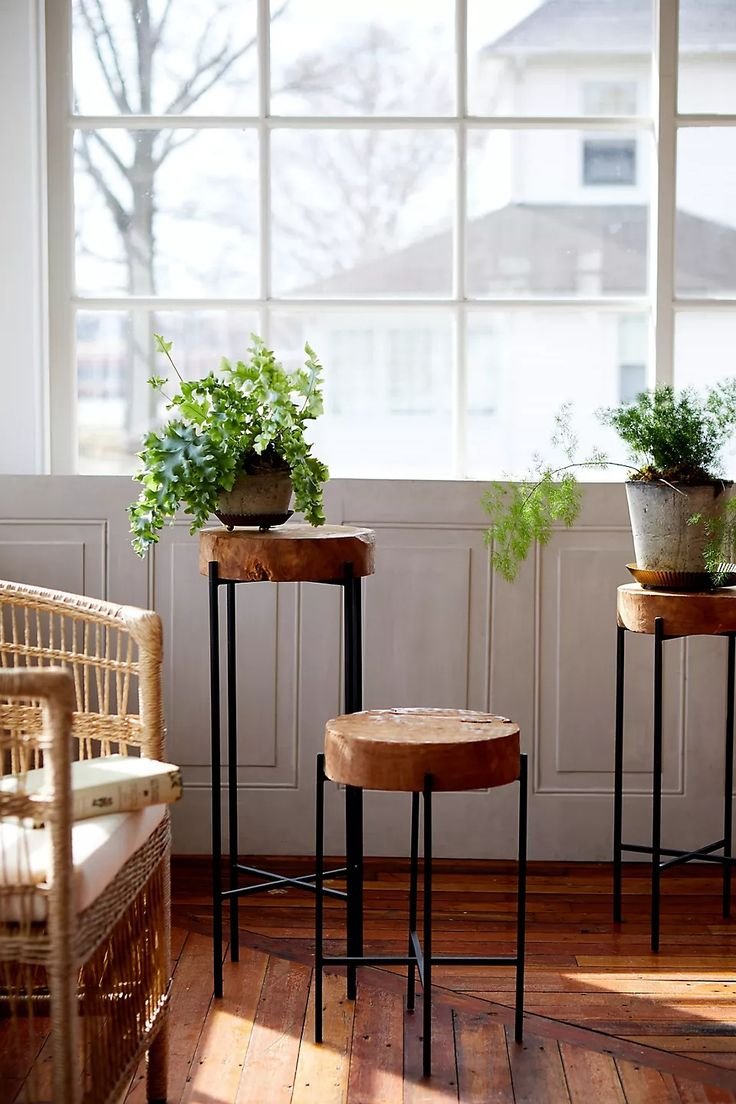
8. Live-Edge Walnut Slab
Natural tree edge intact. Complex walnut grain. Statement base.
Designers favor live-edge pieces precisely because they cannot be replicated. Mass production requires uniformity. Live-edge furniture refuses uniformity by nature. The piece you buy is the only one that exists in its exact form — an increasingly rare quality in the design market.
9. Japanese-Inspired Low Oak Table
Low-slung platform form. Light oak finish. Decoration eliminated entirely.
The Japanese aesthetic discipline that produces this table — remove everything until removal causes damage — is one that professional designers study. Applied here, it produces a table that is visually restful in a way that decorated pieces almost never are.
10. Dark Stained Pedestal Round Table
Single column. Round top. Rich dark stain.
Pedestal tables are a professional designer staple because they solve the circulation problem that four-legged tables create. No protruding corners, no leg-placement negotiation when seating shifts. The round top anchors the room equally from every angle.
11. Reclaimed Teak Rectangle
Reclaimed teak showing its full material history.
Sustainability aside, reclaimed teak has one quality that new material cannot purchase: temporal character. The knots, grain shifts, and slight color variations are evidence of time — which gives the table a narrative presence that new wood and synthetic materials can’t approach.
Metal Tables: Modern, Architectural, Unapologetic
12. Hammered Brass Drum
Artisan-textured brass. Cylinder form. Light response unique to hammered surfaces.
Hammered metalwork has a handcrafted quality that distinguishes it immediately from mass-produced alternatives. The irregular surface texture means it catches and reflects light in ways a smooth surface cannot — giving the table visual life even in a bare room.
13. Blackened Steel and Raw Concrete
Industrial materiality handled with sophisticated restraint.
The professional approach to industrial materials in residential contexts: balance hardness with softness. This table needs velvet, wool, linen — something genuinely yielding nearby. The contrast between the table’s severity and the surrounding softness is where the design resolution happens.
14. Mirror-Finish Stainless Steel Cube
Mirror-polished steel cube. Perfect geometry. Continuous reflection.
Designers use reflective pieces strategically — they expand perceived space, multiply light, and engage with their surroundings rather than simply occupying them. This table is all of those things at once, in the simplest possible geometric form.
15. Antique Bronze Sculptural Base
Sculptural bronze base. Intentionally simple round top.
A clear design hierarchy: the base is the art, the surface is the support. This is a professional design decision — establishing what matters and making everything else subordinate to it. The patina of the bronze will deepen and improve with time.
Tiered and Nesting Designs: Function Elevated to a Design Principle
16. Two-Tier Round Table With Open Shelf
Styled surface on top. Practical shelf below. Both levels designed to be seen.
A professional stylist’s solution: separate the display layer from the functional layer by height. The upper surface is curated; the lower shelf holds what needs holding. Both tiers contribute to the design rather than one disguising the other.
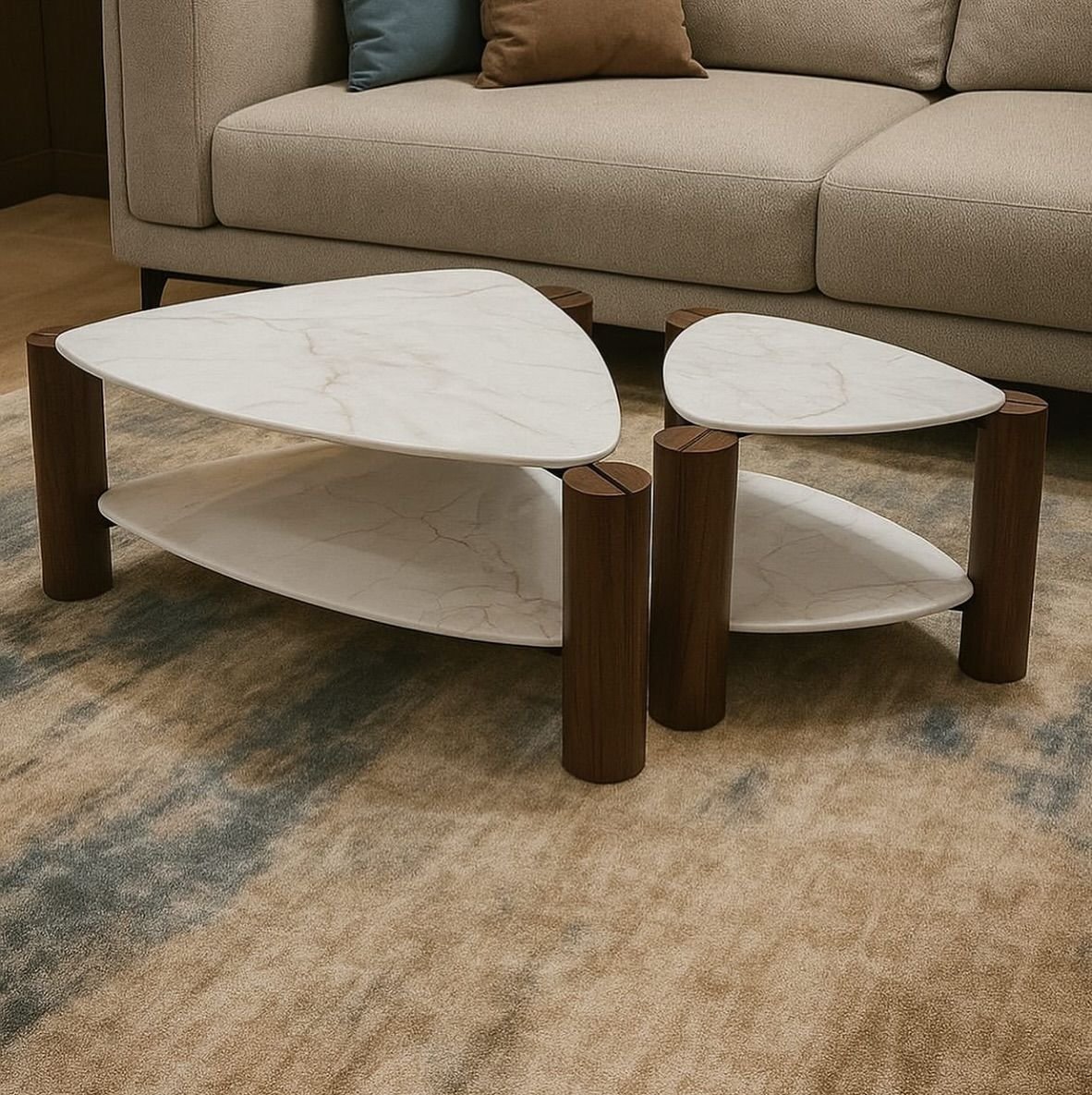
17. Nesting Table Set
Multiple complementary tables that configure to need.
Multifunctional rooms need multifunctional furniture. A nesting set is the professional approach to the flexibility problem: compact when the space needs to breathe, extended when it needs to accommodate. The pieces maintain design coherence in both configurations.
18. Tiered Glass and Marble
Glass on top. Marble below. Layered heights in complementary materials.
Multi-plane tables create a visual experience that flat surfaces simply cannot replicate. The eye moves vertically through the design — up and down between levels — rather than horizontally across a single plane. The design feels active and considered.
Sculptural Tables: Where the Line Between Art and Furniture Dissolves
19. Freeform Resin Table
Cast resin in non-repeating organic forms. Clear or color-saturated.
Furniture designers working in resin are essentially collaborating with the material itself — the final form is partially determined by how the resin moves during the pour. Each piece is genuinely unique. The result is functional sculpture that earns significant conversational real estate.
20. Glazed Ceramic Hourglass
Monolithic ceramic. Hourglass silhouette. Deep matte glaze.
Ceramic furniture occupies a design category that sits outside normal furniture typologies. It has the permanence of stone, the warmth of craft, and a formal simplicity that reads as confident rather than minimal. Rooms with hard, angular furniture need exactly this intervention.
21. Faceted Geometric Hardwood
Hardwood carved into a faceted gem-like form. Shadow composition shifts with light.
The design concept here is sophisticated: a static object that creates the impression of movement through its interaction with changing light. As light shifts throughout the day, the shadow relationships between facets shift too — creating a perpetually slightly-different visual experience.
Petite and Space-Conscious Designs: Small Scale, Full Design Quality
22. Slim Oval Marble-Top Table
Compact oval. Full marble surface. No dimensional compromise on material quality.
Professional designers working with small spaces refuse the idea that limited square footage means accepting diminished design quality. This table is proof of that position: the marble surface is real and beautiful regardless of the table’s footprint.
23. Compact Pedestal Round Under 30 Inches
Sub-30-inch diameter. Centered pedestal. Zero wasted floor area.
The design efficiency of the pedestal format makes it the professional’s choice for compact rooms: maximum surface area per floor footprint, no corner hazards, and circulation clearance that a multi-legged table of equivalent size cannot provide.
24. Transparent Acrylic Table
Optically clear acrylic. No visual weight. Completely functional.
When floor and rug are the design features of a small room, a transparent table allows both to read uninterrupted. Designers use acrylic pieces specifically to preserve what’s working in a space while adding what it needs — a surface — without taking anything away.
Mixed-Material Designs: The Advanced Technique
25. Reclaimed Wood on Forged Iron Frame
Organic warm wood surface. Heavy iron base. Material contrast as the organizing design principle.
Material juxtaposition is a professional design technique because it creates energy that single-material pieces cannot generate. The reclaimed wood brings warmth; the forged iron brings weight and precision. Together they produce something with a distinct and unavoidable presence.
26. Marble Top With Rattan-Wrapped Base
Precision stone surface. Handwoven natural fiber base.
High-low material pairing executed with conviction is a hallmark of sophisticated residential design. This table brings a global material narrative — European quarried stone, Southeast Asian craft tradition — into a single piece that is both formal and relaxed.
27. Leather-Wrapped Surface With Metal Trim
Full-grain leather tabletop. Precision metal perimeter trim.
Leather as a tabletop material gives the living room the same quality that leather brings to a well-designed office: weight, warmth, and a surface that develops character over time rather than deteriorating. The metal trim provides definition and keeps the leather’s warmth from going soft.
Practical Designs for the Reality of Daily Living
28. Lift-Top Wooden Table
Clean wood surface that lifts to reveal concealed storage. Invisible mechanism.
The design principle behind this table is one professional designers return to repeatedly: solve the functional problem within the aesthetic object itself. The storage solution is built into the beautiful furniture piece — not added alongside it.
29. Mid-Century Drawer Table With Tapered Legs
Tapered legs. Integrated drawer. Mid-century proportions maintained precisely.
Mid-century furniture endures not because of nostalgia but because the proportional discipline is genuinely correct. The tapered leg is neither heavy nor spindly. The drawer sits flush and invisible. The surface area is sufficient without being excessive. Design decisions made at this level produce furniture that ages exceptionally well.
The Professional’s Method for Choosing
Interior designers don’t browse randomly. They filter deliberately.
First filter — seating configuration: Sectional → round or oval. Facing sofas → rectangular. Mixed arrangement → round softens and unifies.
Second filter — material dialogue: Wood-heavy room → introduce glass or metal as a counterpoint element. Neutral-dominant room → use the table as the material interest moment.
Third filter — functional priority: Clutter control → storage design. Spatial tightness → transparent or slim. Aesthetic flatness → sculptural or mixed-material.
Three filters. One table. Move forward.
The Proportioning Rule No Designer Skips
Wrong proportions undermine even the most beautiful table selection.
The professional rule: table length at approximately two-thirds the sofa length; height matched to or just below the seat cushion plane.
An undersized table makes the seating arrangement feel unanchored. An oversized table makes the room feel blocked and navigation-hostile. Both errors are visible immediately to anyone who enters the room.
Measure the sofa. Measure the floor area. Then select. This sequence is non-negotiable.
Time to Make the Decision
Professional designers work quickly once they have the information they need. You now have the information.
A design emerged from this list that resonated — stopped your scroll, made you reconsider your room.
That moment of recognition is the decision. Everything else is logistics.
Measure your space. Confirm the proportions. Find the table. Your living room has been waiting for this particular anchor for long enough.