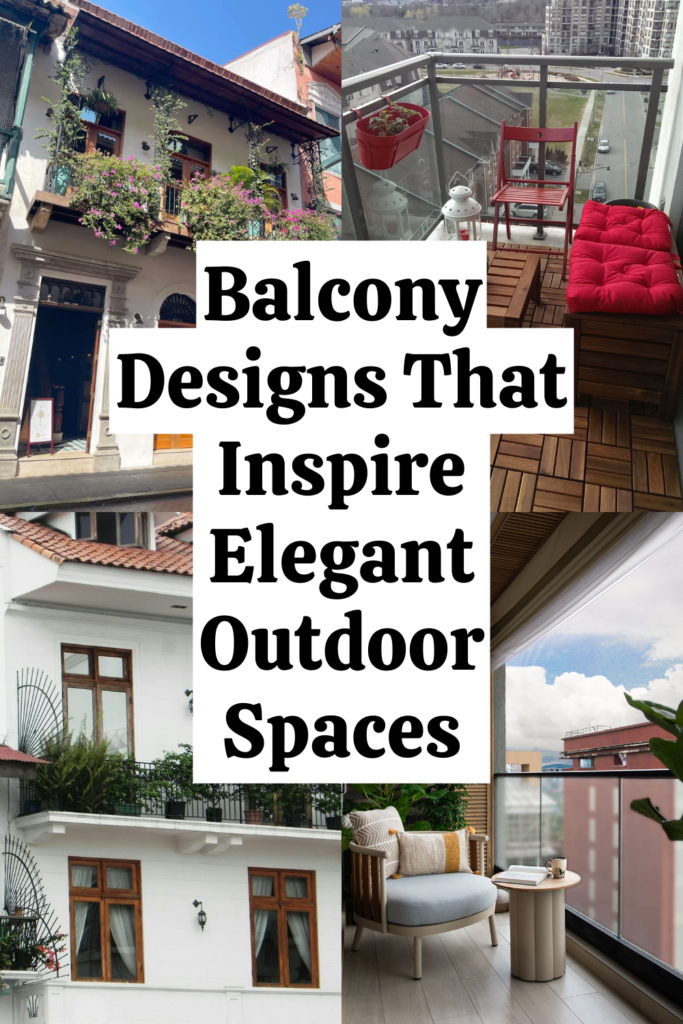
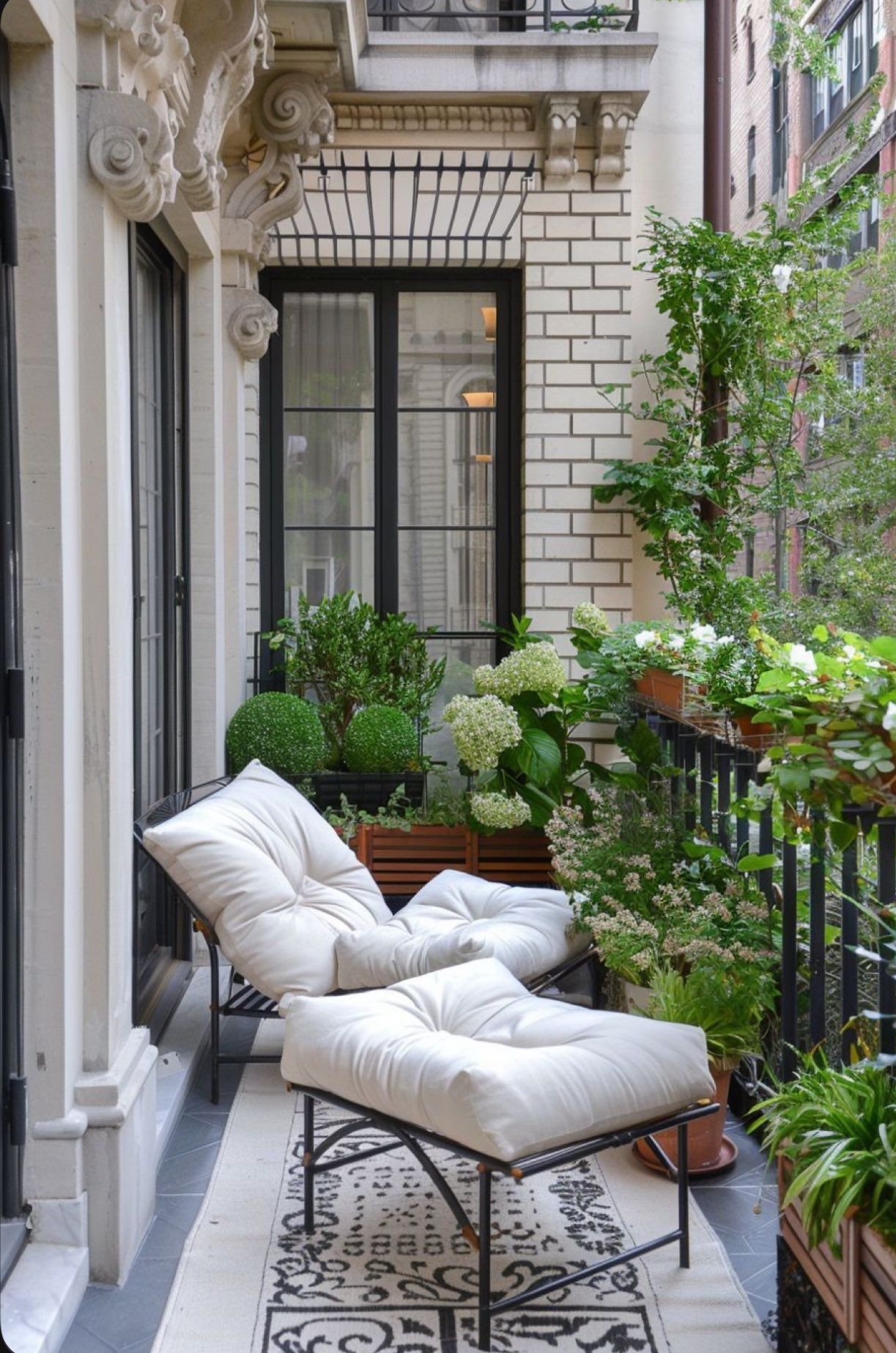
Balcony Styling Tips for Apartments: Get More From Your Outdoor Space
Disclosure : This post may contain affiliate links or paid partnerships. I may earn compensation if you click a link or make a purchase, at no additional cost to you. See my disclosure for more info.
You know the drill.
Door slides open. You step out. One look at the state of things.
Cold concrete. A chair that belongs in a landfill. Something brown and shriveled in a pot near the wall.
You stand there for a few seconds.
Then you step back in, pull the door shut, and add “fix balcony” to the mental list of things you’ll never actually do.
Classic.
Meanwhile, the internet keeps shoving picturesque balconies in your face. Cascading plants. Twinkling lights. Aesthetic breakfast spreads with latte art and fresh fruit.
And the reaction is always the same:
“Great for them. My balcony is basically a concrete shelf. That’s not my reality.”
Except it could be.
A tight balcony isn’t a deficiency. It’s not a flaw. It’s not an excuse.
It’s a blank canvas you’ve been staring at without seeing.
The problem isn’t your outdoor space. It’s that no one ever gave you an actionable, realistic playbook for making it come alive.
Here’s your playbook.
When you finish, that neglected rectangle outside your living room will look like pure potential. You’ll know what to do, how to start, and exactly what to avoid.
No gimmicks. No pretending your balcony is bigger than it is.
Just honest design that works.
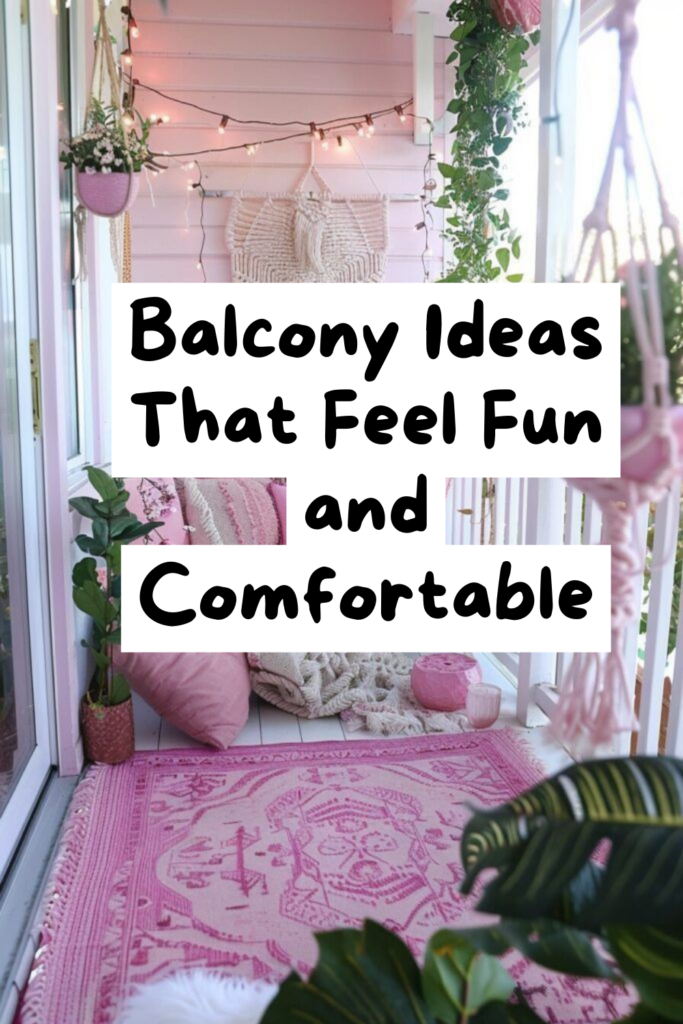
Let’s get into it.
Hold On — Avoid This Trap First
One thing before we begin.
The most damaging mistake in balcony design?
Blindly copying someone else’s space.
That jaw-dropping outdoor retreat you bookmarked? It lives on a first-floor Sicilian apartment with 150 square feet and a warm breeze twelve months a year.
Your narrow, wind-prone, shade-heavy balcony six floors up?
A completely different design problem.
Trying to mirror that setup gets you burned. You overspend, the result falls flat, and you end up hating the space more than before.
Not a balcony failure. A planning failure.
Solid balcony design starts from your truth. Real measurements. Real climate. Real light. Real rules. Real budget.
Stop working against your space. Start working with it.
That’s the foundation everything else builds on.
Ready for specifics? Let’s go.
1. Take Action This Weekend — Just One Step
I want to start here because it’s the most important thing you’ll read.
When you’re done with this article, your brain will do one of two things.
Rev up — excitedly planning your first move.
Or freeze — overwhelmed by the volume of ideas.
If the freeze happens, don’t worry. It’s normal. And here’s the antidote.
Do one thing. Only one.
Pick a single idea from this list. Buy the rug. String up warm lights. Grab three plants that match your balcony’s conditions.
Execute that one task this weekend. Nothing more.
The following weekend, add something else. Then another the week after.
In four weeks, you’ll walk onto a balcony you barely recognize. And you’ll sit there wondering why you put it off for so long.
The transformation starts with one move. Make it.
2. Defend Your Setup Against the Elements
Inspiration posts don’t talk about this.
But they should.
Rain turns unprotected cushions into soggy messes. Wind sends lightweight furniture sliding. Sun drains color from every exposed fabric. Humidity cultivates mold on anything left outside.
Without weather planning, your beautiful setup has an expiration date of about eight weeks.
Protect your investment from day one.
Choose furniture crafted from aluminum, synthetic wicker, or treated wood. These materials endure season after season.
Tuck cushions and throws into a compact waterproof deck box. Put a cushion on the lid — instant extra seat.
Use UV-resistant textile wherever fabric is exposed. Premium and budget options both exist.
When a storm brews, spend two minutes moving delicate items inside. That tiny habit saves you from having to replace your entire setup next year.
3. Think Up — Walls and Railings Are Gold
The classic small-balcony mistake: thinking flat.
Length. Width. Done.
But walls? Railing? Vertical space?
Untouched. Unused. Full of potential.
Wall-mounted planters. Hanging baskets. Shelving that climbs. Tiered stands that hold six pots in the footprint of one. Pegboards for tools and small accessories.
Rail-mounted containers bring greenery without eating a single inch of floor.
Renting? Can’t drill? Over-the-railing hooks and tension rod systems solve everything without leaving a mark.
Want a balcony that looks lush and full without feeling cramped?
Build up, not out. That’s the answer.
4. Layer Your Lighting (Nothing Else Transforms This Fast)
If there’s only one change you make, make it this one.
Not the furniture. Not the decor.
Lighting.
Most apartment balconies have one cold fixture by the door. Which gives your outdoor space all the warmth of a subway platform.
The fix is layering. Three levels.
Top: Warm-white string lights along the railing or looped overhead. No colored bulbs.
Mid-level: Battery wall sconces. Solar lanterns sitting on a shelf or table.
Floor: LED candles behind glass. Small solar lights in planters.
Three layers. That’s all it takes.
Your balcony goes from sterile afterthought to a glowing space you want to inhabit. Especially after dark.
And the total investment? Often less than dinner for two.
5. Use a Rug to Anchor Everything
The raised eyebrow. I expect it.
“A rug. Outside. On a balcony.”
Yes.
It’s the simplest single trick to make an outdoor space feel finished and intentional. Not abandoned. Not accidental. Designed.
Color. Warmth. Texture. Visual boundaries. A rug delivers all of it.
Choose one built for exterior exposure — polypropylene or recycled plastic. Water-proof. Mold-proof. Fade-proof. Hose-off clean.
Pick a size that slides under your seating but shows a margin of floor at the perimeter.
That margin creates the optical illusion of a larger space.
Inexpensive. Quick. Surprisingly powerful.
6. Measure First (Not Later — First)
The step you’ll want to skip.
“I already know my balcony. It’s small. Let me just buy stuff.”
That’s the exact thinking that leads to a table that swallows the floor and chairs that block the door.
Grab a tape measure. Write down the length, width, railing height, door swing arc, and drainage points.
Use painter’s tape to mock up furniture footprints on the floor.
In under a minute, you’ll see what works and what’s a spatial disaster.
No surprise returns. No regret purchases. No wasted budget.
Five minutes of measuring. Worth more than every other step combined.
7. Tackle Privacy Head-On
The unspoken barrier to enjoying your balcony.
Your neighbor is right there. Close enough to overhear your phone calls. The building across has a front-row seat to everything you do outside.
Feeling watched is the fastest way to never use the balcony.
Solve it and the space comes alive.
Tall planters with bamboo or tall grasses form a natural visual barrier. Weather-proof curtains offer on-demand seclusion. Lattice with climbing jasmine or ivy becomes more effective as months pass.
Bamboo or reed panels fixed to the railing with ties? Budget-friendly and immediately functional.
You don’t need fortress-level privacy. Just enough screening to feel at ease.
That small buffer changes everything about how you experience the space.
8. Check Building Rules First (Save Yourself the Headache)
Not the exciting part.
Still critical.
Many buildings strictly regulate what you can do with your balcony. Attachments, installations, specific furniture, even grills.
Review your lease before doing anything you can’t undo.
Some buildings prohibit wall drilling. Others restrict rail-mounted items. A few have furniture limitations.
Learn the boundaries early. Design within them.
A violation letter after a weekend of hard work? Deflating in a way that’s entirely avoidable.
9. Stop the Plant Guilt Cycle
Time for honesty.
You’ve attempted plants before. They didn’t make it. The evidence sits in your corner right now — dry pots, dead stems, lingering shame.
Here’s the truth: you don’t lack a green thumb. You picked plants that didn’t fit your environment.
Blazing south-facing sun? Go with succulents, lavender, geraniums, rosemary. They were built for this.
Shaded north-facing position? Choose ferns, begonias, hostas, impatiens. They actually prefer low light.
Wind-hammered high floor? Thyme, sedum, ornamental grasses. Low, tough, and flexible.
Bad at remembering to water? Self-watering pots. Set and forget.
Rarely home? Snake plants and pothos. Almost indestructible.
Start with three. Keep them thriving. Scale up from success.
Balcony gardens are built in stages. Not in one frantic shopping trip.
10. Swap Details With the Seasons (Not Everything)
Burnout works like this.
You build a summer balcony you love. October rolls in. It all feels mismatched. You convince yourself the only fix is tearing it down and starting fresh.
So you don’t. And the space sits dormant until spring.
Stop the loop.
Build a core setup that works in any season. Furniture, rug, main lighting — permanent fixtures.
Rotate only the accents.
Summer: bold cushion covers, blooming plants, chilled beverages.
Fall: warm throws, decorative kale, candle warmth.
Winter: evergreen trimmings, fairy lights, a heavy blanket.
Details shift. Foundation stays.
Thirty minutes per season. Almost nothing spent. Always fresh.
11. Design Intentional Zones (Yes, Even Here)
Brace for skepticism.
“Zones on a balcony this small? Be real.”
I am being real.
Even the most compact balcony gains from areas with defined purpose.
Chair plus small side table? Morning coffee zone.
Railing planters? Mini garden strip.
Rug beneath the seating? Visual anchor.
No room dividers needed. Just arrangement that signals intent.
Spaces with purpose attract you. Spaces without repel you.
It’s human wiring. Leverage it.
12. Make Your Furniture Work Overtime
On a tight balcony, decorative-only pieces are freeloaders.
Every item must earn its keep.
You need things that serve double or triple duty.
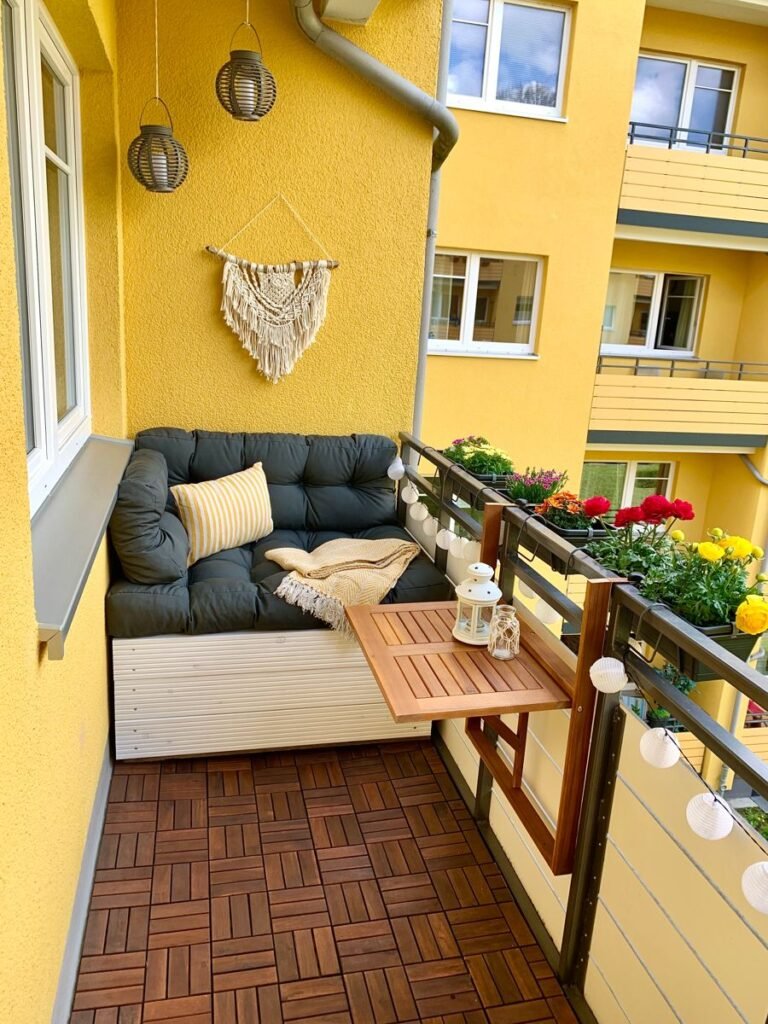
A bistro set that folds flat to the wall. A bench with storage built into the seat. A drop-leaf table that mounts on the wall — open for use, folded for space.
Stackable stools. Nesting side tables. A hanging chair that gives back every inch of floor.
The filter is simple and ruthless.
Fold. Stack. Store. Multitask. Or leave.
Tough standard? Absolutely.
Worth it? Without question.